
Upcoming Events
Join us for a storytime with rhymes, songs, and stories for your baby. Ideal for ages 0-2.
Disclaimer(s)
The library makes every effort to ensure our programs can be enjoyed by all. If you have any concerns about accessibility or need to request specific accommodations, please contact the library.
We often take photographs during library events. Please let our photographer know if you do not want us to publish photos of your child.
Read to a therapy dog! Children can sharpen their reading skills in a stress-free zone, boosted by the support of their furry, canine pals. Plan to arrive a few minutes early if you need to choose a book to read.
Disclaimer(s)
We often take photographs during library events. Please let our photographer know if you do not want us to publish photos of your child.
Senior citizens, join us for a free exercise program to increase your strength and balance. Remain active in your lifestyle while reducing your risk of falling.
Please note the following:
Disclaimer(s)
The library makes every effort to ensure our programs can be enjoyed by all. If you have any concerns about accessibility or need to request specific accommodations, please contact the library.
Students in grades 6th up to 12th are invited to join us at our Teen Space after school for snacks, WiFi access, games, and socializing with friends.
Board games, card games, crafts, manga, video games, let's do it all!
Disclaimer(s)
The library makes every effort to ensure our programs can be enjoyed by all. If you have any concerns about accessibility or need to request specific accommodations, please contact the library.
We cannot guarantee that food served at this program has not come into contact with tree nuts, soy, or other allergens.
We often take photographs during library events. Please let our photographer know if you do not want us to publish photos of your child.

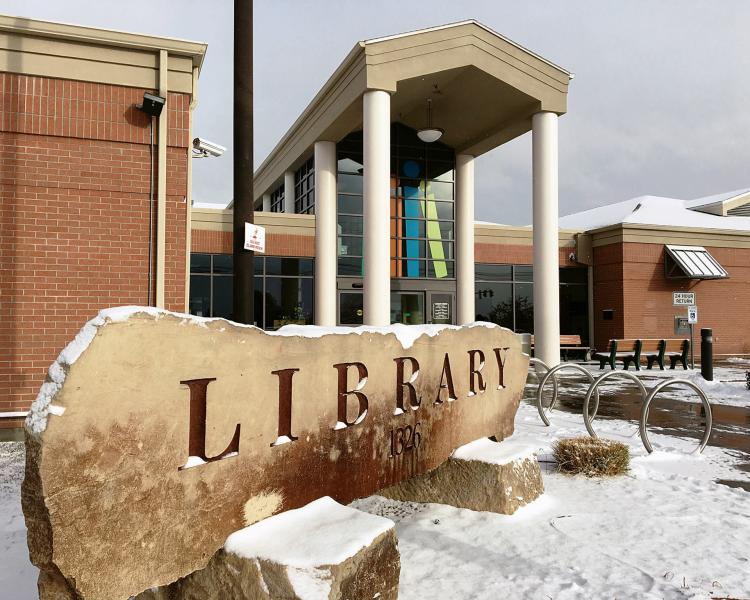


Cold weather. Hot reads.
-
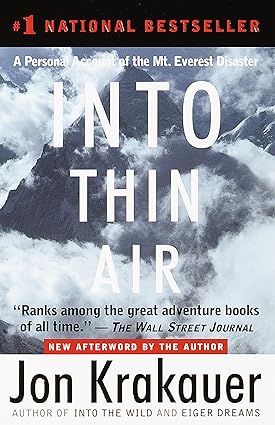
Into Thin Air
#1 NATIONAL BESTSELLER • The epic account of the storm on the summit of Mt. Everest that claimed five lives and left countless more—including Krakauer's—in guilt-ridden disarray.
"A harrowing tale of the perils of high-altitude climbing, a story of bad luck and worse judgment and of heartbreaking heroism." —PEOPLE
A bank of clouds was assembling on the not-so-distant horizon, but journalist-mountaineer Jon Krakauer, standing on the summit of Mt. Everest, saw nothing that "suggested that a murderous storm was bearing down." He was wrong.
By writing Into Thin Air, Krakauer may have hoped to exorcise some of his own demons and lay to rest some of the painful questions that still surround the event. He takes great pains to provide a balanced picture of the people and events he witnessed and gives due credit to the tireless and dedicated Sherpas. He also avoids blasting easy targets such as Sandy Pittman, the wealthy socialite who brought an espresso maker along on the expedition. Krakauer's highly personal inquiry into the catastrophe provides a great deal of insight into what went wrong. But for Krakauer himself, further interviews and investigations only lead him to the conclusion that his perceived failures were directly responsible for a fellow climber's death. Clearly, Krakauer remains haunted by the disaster, and although he relates a number of incidents in which he acted selflessly and even heroically, he seems unable to view those instances objectively. In the end, despite his evenhanded and even generous assessment of others' actions, he reserves a full measure of vitriol for himself.
This updated trade paperback edition of Into Thin Air includes an extensive new postscript that sheds fascinating light on the acrimonious debate that flared between Krakauer and Everest guide Anatoli Boukreev in the wake of the tragedy. "I have no doubt that Boukreev's intentions were good on summit day," writes Krakauer in the postscript, dated August 1999. "What disturbs me, though, was Boukreev's refusal to acknowledge the possibility that he made even a single poor decision. Never did he indicate that perhaps it wasn't the best choice to climb without gas or go down ahead of his clients." As usual, Krakauer supports his points with dogged research and a good dose of humility. But rather than continue the heated discourse that has raged since Into Thin Air's denouncement of guide Boukreev, Krakauer's tone is conciliatory; he points most of his criticism at G. Weston De Walt, who coauthored The Climb, Boukreev's version of events. And in a touching conclusion, Krakauer recounts his last conversation with the late Boukreev, in which the two weathered climbers agreed to disagree about certain points. Krakauer had great hopes to patch things up with Boukreev, but the Russian later died in an avalanche on another Himalayan peak, Annapurna I.
In 1999, Krakauer received an Academy Award in Literature from the American Academy of Arts and Letters--a prestigious prize intended "to honor writers of exceptional accomplishment." According to the Academy's citation, "Krakauer combines the tenacity and courage of the finest tradition of investigative journalism with the stylish subtlety and profound insight of the born writer. His account of an ascent of Mount Everest has led to a general reevaluation of climbing and of the commercialization of what was once a romantic, solitary sport; while his account of the life and death of Christopher McCandless, who died of starvation after challenging the Alaskan wilderness, delves even more deeply and disturbingly into the fascination of nature and the devastating effects of its lure on a young and curious mind." -
Powder Days
*A Boston Globe Bestseller!*
*An Outside Magazine Book Club Pick!*
*Winner of the International Ski Association's Ullr Book Award!*
"A sparkling account."--Wall Street Journal
An electrifying adventure into the rich history of skiing and the modern heart of ski-bum culture, from one of America's most preeminent ski journalists
The story of skiing is, in many ways, the story of America itself. Blossoming from the Tenth Mountain Division in World War II, the sport took hold across the country, driven by adventurers seeking the rush of freedom that only cold mountain air could provide. As skiing gained in popularity, mom-and-pop backcountry hills gave way to groomed trails and eventually the megaresorts of today. Along the way, the pioneers and diehards--the ski bums--remained the beating heart of the scene.
Veteran ski journalist and former ski bum Heather Hansman takes readers on an exhilarating journey into the hidden history of American skiing, offering a glimpse into an underexplored subculture from the perspective of a true insider. Hopping from Vermont to Colorado, Montana to West Virginia, Hansman profiles the people who have built their lives around a cold-weather obsession. Along the way she reckons with skiing's problematic elements and investigates how the sport is evolving in the face of the existential threat of climate change. -
This Land of Snow
2021 National Outdoor Book Award Winner in Journeys
A passionate skier since he was a child, Anders Morley dreamed of going on a significant adventure, something bold and of his own design. And so one year in his early thirties, he decided to strap on cross-country skis to travel across Canada in the winter alone.
This Land of Snow is about that journey and a man who must come to terms with what he has left behind, as well as how he wants to continue living after his trip is over. It is an honest, thoughtful, and humorous reckoning of an adventure filled with adrenalin and exuberance, as well as mistakes and danger. Along the way readers gain insight, both charming and fascinating, into Northern outdoor culture and modern-day wilderness living, the history of northern exploration and Nordic skiing, the right to roam movement, winter ecology, and more.
Throughout, Morley's clear, subtle, and self-deprecating voice speaks to a backwoods-genteel aesthetic that explores the dichotomy between wildness and refinement, language and personal story, journey and home.
-
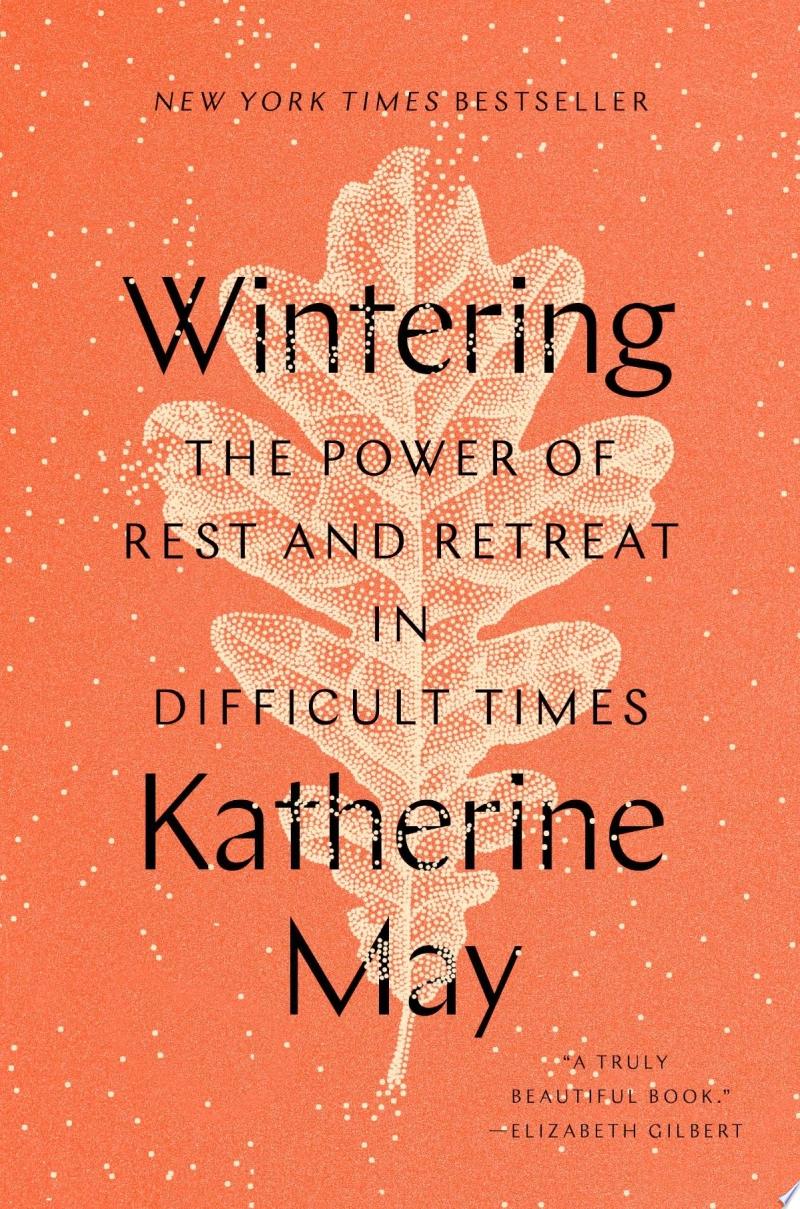
Wintering
THE RUNAWAY NEW YORK TIMES BESTSELLER
“Katherine May opens up exactly what I and so many need to hear but haven't known how to name.” —Krista Tippett, On Being
“Every bit as beautiful and healing as the season itself. . . . This is truly a beautiful book.” —Elizabeth Gilbert
"Proves that there is grace in letting go, stepping back and giving yourself time to repair in the dark...May is a clear-eyed observer and her language is steady, honest and accurate—capturing the sense, the beauty and the latent power of our resting landscapes." —Wall Street Journal
From the author of the New York Times bestseller Enchantment: Awakening Wonder in an Anxious Age, this is an intimate, revelatory exploration of the ways we can care for and repair ourselves when life knocks us down.
Sometimes you slip through the cracks: unforeseen circumstances like an abrupt illness, the death of a loved one, a break up, or a job loss can derail a life. These periods of dislocation can be lonely and unexpected. For May, her husband fell ill, her son stopped attending school, and her own medical issues led her to leave a demanding job. Wintering explores how she not only endured this painful time, but embraced the singular opportunities it offered.
A moving personal narrative shot through with lessons from literature, mythology, and the natural world, May's story offers instruction on the transformative power of rest and retreat. Illumination emerges from many sources: solstice celebrations and dormice hibernation, C.S. Lewis and Sylvia Plath, swimming in icy waters and sailing arctic seas.
Ultimately Wintering invites us to change how we relate to our own fallow times. May models an active acceptance of sadness and finds nourishment in deep retreat, joy in the hushed beauty of winter, and encouragement in understanding life as cyclical, not linear. A secular mystic, May forms a guiding philosophy for transforming the hardships that arise before the ushering in of a new season. -
The Joy of Winter Hiking
Your daily dose of nature doesn't have to retreat with the warm weather. The Joy of Winter Hiking is your ultimate guide to getting outdoors in the most underrated season. In fact, author Derek Dellinger believes you should be seeking outdoor adventure in colder months, not just in spite of snow and cloudy days, but because of these factors! From unmatched snow-capped views to the mental and physical health benefits of nature to precious wildlife sightings, the winter holds endless hiking opportunities.
Alongside stunning winter photography, Derek prepares readers to venture safely and securely into nature. There's advice on the gear you need to get going, the wildlife you might expect to find, understanding weather risks, and even the how-tos of cold-weather camping. Made for the winter sportsman, tree hugger, and avid hiker alike, this book is a thorough guide and breathtaking showcase of what's awaiting you on the trail.
-
The Return of the Light
The winter solstice, the day the "sun stands still," marks the longest night and the shortest day of the year, and it comes either on December 20th or 21st. Celebrations honoring the winter solstice as a moment of transition and renewal date back thousands of years and occur among many peoples on every continent. The Return of the Light makes an ideal companion for everyone who carries on this tradition, no matter what their faith. Storyteller Carolyn McVickar Edwards retells twelve traditional tales?from North America, China, Scandinavia, India, Africa, South America, Europe, and Polynesia?that honor this magical moment. These are stories that will renew our wonder of the miracle of rebirth and the power of transition from darkness into light.
-
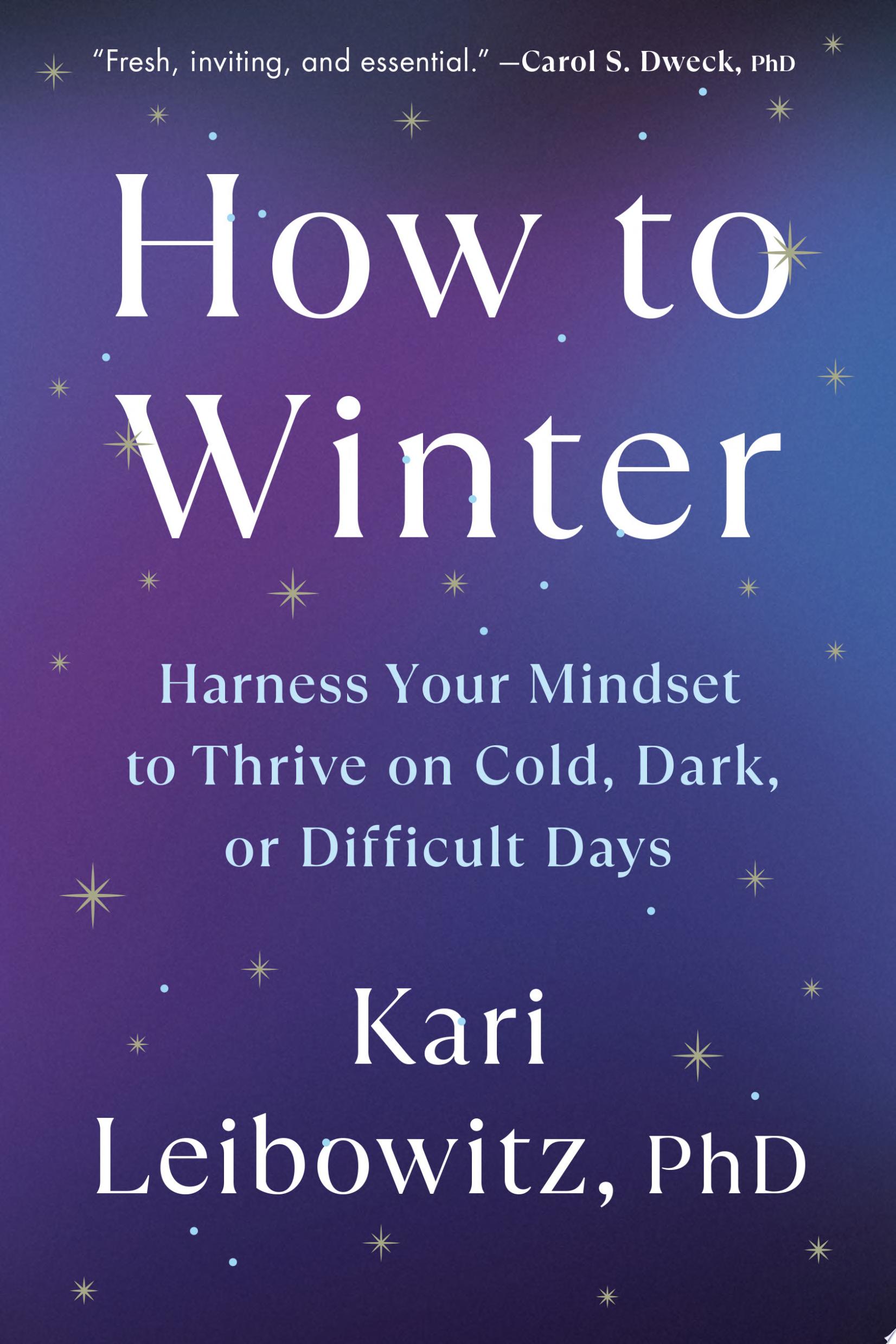
How to Winter
A blend of mindset science, original research, and cultural insights for cultivating a positive “wintertime mindset,” to vanquish winter blues and find joy and comfort in dark times year-round.
Do you dread the end of Daylight Saving Time and grouch about the long, chilly season of gray skies and ice? Do you find yourself in a slump every January and February? What if there were a way to rethink this time of year? Psychologist and winter expert Kari Leibowitz’s galvanizing HOW TO WINTER uses mindset science to help readers embrace winter as a season to be enjoyed, not endured—and in turn, learn powerful lessons that can impact our mental wellbeing throughout the year.
Kari Leibowitz moved above the Arctic Circle – where the sun doesn’t rise for two months each winter –expecting to research the season’s negative effects on mental health, only to find that inhabitants actually looked forward to it with delight and enthusiasm. Leibowitz has since travelled to places on earth with some of the coldest, darkest, longest and most intense winters, and discovered the power of “wintertime mindset”— viewing the season as full of opportunity and wonder. Impactful strategies for cultivating this wintertime mindset can teach us not just about braving the gray, cold months of the year, but also the darker and more difficult seasons of life.
- In Tromsø, Norway, people live in rhythm with nature, adapting to the months-long Polar Night by honoring seasonal fluctuations in energy, slowing down, and resting more.
- On the Isle of Lewis, off the coast of Scotland, communal gatherings around roaring fires embrace darkness and provide connection during long nights.
- In Yamagata, Japan, families sink into steaming onsen baths, banishing the chill of winter with healthful soaks that improve sleep and reduce risk of heart attack.
Inspired by cutting-edge psychological and behavioral science research as well as cultures worldwide that find warmth and joy in winter’s extremes, HOW TO WINTER provides readers with concrete tools for making winter wonderful wherever they live and harnessing the power of small mindset changes with big impact to help readers embrace every season of life.
POV: You're warming up by the fire with a good book 📘
-
Into Thin Air
#1 NATIONAL BESTSELLER • The epic account of the storm on the summit of Mt. Everest that claimed five lives and left countless more—including Krakauer's—in guilt-ridden disarray.
"A harrowing tale of the perils of high-altitude climbing, a story of bad luck and worse judgment and of heartbreaking heroism." —PEOPLE
A bank of clouds was assembling on the not-so-distant horizon, but journalist-mountaineer Jon Krakauer, standing on the summit of Mt. Everest, saw nothing that "suggested that a murderous storm was bearing down." He was wrong.
By writing Into Thin Air, Krakauer may have hoped to exorcise some of his own demons and lay to rest some of the painful questions that still surround the event. He takes great pains to provide a balanced picture of the people and events he witnessed and gives due credit to the tireless and dedicated Sherpas. He also avoids blasting easy targets such as Sandy Pittman, the wealthy socialite who brought an espresso maker along on the expedition. Krakauer's highly personal inquiry into the catastrophe provides a great deal of insight into what went wrong. But for Krakauer himself, further interviews and investigations only lead him to the conclusion that his perceived failures were directly responsible for a fellow climber's death. Clearly, Krakauer remains haunted by the disaster, and although he relates a number of incidents in which he acted selflessly and even heroically, he seems unable to view those instances objectively. In the end, despite his evenhanded and even generous assessment of others' actions, he reserves a full measure of vitriol for himself.
This updated trade paperback edition of Into Thin Air includes an extensive new postscript that sheds fascinating light on the acrimonious debate that flared between Krakauer and Everest guide Anatoli Boukreev in the wake of the tragedy. "I have no doubt that Boukreev's intentions were good on summit day," writes Krakauer in the postscript, dated August 1999. "What disturbs me, though, was Boukreev's refusal to acknowledge the possibility that he made even a single poor decision. Never did he indicate that perhaps it wasn't the best choice to climb without gas or go down ahead of his clients." As usual, Krakauer supports his points with dogged research and a good dose of humility. But rather than continue the heated discourse that has raged since Into Thin Air's denouncement of guide Boukreev, Krakauer's tone is conciliatory; he points most of his criticism at G. Weston De Walt, who coauthored The Climb, Boukreev's version of events. And in a touching conclusion, Krakauer recounts his last conversation with the late Boukreev, in which the two weathered climbers agreed to disagree about certain points. Krakauer had great hopes to patch things up with Boukreev, but the Russian later died in an avalanche on another Himalayan peak, Annapurna I.
In 1999, Krakauer received an Academy Award in Literature from the American Academy of Arts and Letters--a prestigious prize intended "to honor writers of exceptional accomplishment." According to the Academy's citation, "Krakauer combines the tenacity and courage of the finest tradition of investigative journalism with the stylish subtlety and profound insight of the born writer. His account of an ascent of Mount Everest has led to a general reevaluation of climbing and of the commercialization of what was once a romantic, solitary sport; while his account of the life and death of Christopher McCandless, who died of starvation after challenging the Alaskan wilderness, delves even more deeply and disturbingly into the fascination of nature and the devastating effects of its lure on a young and curious mind." -
Powder Days
*A Boston Globe Bestseller!*
*An Outside Magazine Book Club Pick!*
*Winner of the International Ski Association's Ullr Book Award!*
"A sparkling account."--Wall Street Journal
An electrifying adventure into the rich history of skiing and the modern heart of ski-bum culture, from one of America's most preeminent ski journalists
The story of skiing is, in many ways, the story of America itself. Blossoming from the Tenth Mountain Division in World War II, the sport took hold across the country, driven by adventurers seeking the rush of freedom that only cold mountain air could provide. As skiing gained in popularity, mom-and-pop backcountry hills gave way to groomed trails and eventually the megaresorts of today. Along the way, the pioneers and diehards--the ski bums--remained the beating heart of the scene.
Veteran ski journalist and former ski bum Heather Hansman takes readers on an exhilarating journey into the hidden history of American skiing, offering a glimpse into an underexplored subculture from the perspective of a true insider. Hopping from Vermont to Colorado, Montana to West Virginia, Hansman profiles the people who have built their lives around a cold-weather obsession. Along the way she reckons with skiing's problematic elements and investigates how the sport is evolving in the face of the existential threat of climate change. -
This Land of Snow
2021 National Outdoor Book Award Winner in Journeys
A passionate skier since he was a child, Anders Morley dreamed of going on a significant adventure, something bold and of his own design. And so one year in his early thirties, he decided to strap on cross-country skis to travel across Canada in the winter alone.
This Land of Snow is about that journey and a man who must come to terms with what he has left behind, as well as how he wants to continue living after his trip is over. It is an honest, thoughtful, and humorous reckoning of an adventure filled with adrenalin and exuberance, as well as mistakes and danger. Along the way readers gain insight, both charming and fascinating, into Northern outdoor culture and modern-day wilderness living, the history of northern exploration and Nordic skiing, the right to roam movement, winter ecology, and more.
Throughout, Morley's clear, subtle, and self-deprecating voice speaks to a backwoods-genteel aesthetic that explores the dichotomy between wildness and refinement, language and personal story, journey and home.
-
Wintering
THE RUNAWAY NEW YORK TIMES BESTSELLER
“Katherine May opens up exactly what I and so many need to hear but haven't known how to name.” —Krista Tippett, On Being
“Every bit as beautiful and healing as the season itself. . . . This is truly a beautiful book.” —Elizabeth Gilbert
"Proves that there is grace in letting go, stepping back and giving yourself time to repair in the dark...May is a clear-eyed observer and her language is steady, honest and accurate—capturing the sense, the beauty and the latent power of our resting landscapes." —Wall Street Journal
From the author of the New York Times bestseller Enchantment: Awakening Wonder in an Anxious Age, this is an intimate, revelatory exploration of the ways we can care for and repair ourselves when life knocks us down.
Sometimes you slip through the cracks: unforeseen circumstances like an abrupt illness, the death of a loved one, a break up, or a job loss can derail a life. These periods of dislocation can be lonely and unexpected. For May, her husband fell ill, her son stopped attending school, and her own medical issues led her to leave a demanding job. Wintering explores how she not only endured this painful time, but embraced the singular opportunities it offered.
A moving personal narrative shot through with lessons from literature, mythology, and the natural world, May's story offers instruction on the transformative power of rest and retreat. Illumination emerges from many sources: solstice celebrations and dormice hibernation, C.S. Lewis and Sylvia Plath, swimming in icy waters and sailing arctic seas.
Ultimately Wintering invites us to change how we relate to our own fallow times. May models an active acceptance of sadness and finds nourishment in deep retreat, joy in the hushed beauty of winter, and encouragement in understanding life as cyclical, not linear. A secular mystic, May forms a guiding philosophy for transforming the hardships that arise before the ushering in of a new season. -
The Joy of Winter Hiking
Your daily dose of nature doesn't have to retreat with the warm weather. The Joy of Winter Hiking is your ultimate guide to getting outdoors in the most underrated season. In fact, author Derek Dellinger believes you should be seeking outdoor adventure in colder months, not just in spite of snow and cloudy days, but because of these factors! From unmatched snow-capped views to the mental and physical health benefits of nature to precious wildlife sightings, the winter holds endless hiking opportunities.
Alongside stunning winter photography, Derek prepares readers to venture safely and securely into nature. There's advice on the gear you need to get going, the wildlife you might expect to find, understanding weather risks, and even the how-tos of cold-weather camping. Made for the winter sportsman, tree hugger, and avid hiker alike, this book is a thorough guide and breathtaking showcase of what's awaiting you on the trail.
-
The Return of the Light
The winter solstice, the day the "sun stands still," marks the longest night and the shortest day of the year, and it comes either on December 20th or 21st. Celebrations honoring the winter solstice as a moment of transition and renewal date back thousands of years and occur among many peoples on every continent. The Return of the Light makes an ideal companion for everyone who carries on this tradition, no matter what their faith. Storyteller Carolyn McVickar Edwards retells twelve traditional tales?from North America, China, Scandinavia, India, Africa, South America, Europe, and Polynesia?that honor this magical moment. These are stories that will renew our wonder of the miracle of rebirth and the power of transition from darkness into light.
-
How to Winter
A blend of mindset science, original research, and cultural insights for cultivating a positive “wintertime mindset,” to vanquish winter blues and find joy and comfort in dark times year-round.
Do you dread the end of Daylight Saving Time and grouch about the long, chilly season of gray skies and ice? Do you find yourself in a slump every January and February? What if there were a way to rethink this time of year? Psychologist and winter expert Kari Leibowitz’s galvanizing HOW TO WINTER uses mindset science to help readers embrace winter as a season to be enjoyed, not endured—and in turn, learn powerful lessons that can impact our mental wellbeing throughout the year.
Kari Leibowitz moved above the Arctic Circle – where the sun doesn’t rise for two months each winter –expecting to research the season’s negative effects on mental health, only to find that inhabitants actually looked forward to it with delight and enthusiasm. Leibowitz has since travelled to places on earth with some of the coldest, darkest, longest and most intense winters, and discovered the power of “wintertime mindset”— viewing the season as full of opportunity and wonder. Impactful strategies for cultivating this wintertime mindset can teach us not just about braving the gray, cold months of the year, but also the darker and more difficult seasons of life.
- In Tromsø, Norway, people live in rhythm with nature, adapting to the months-long Polar Night by honoring seasonal fluctuations in energy, slowing down, and resting more.
- On the Isle of Lewis, off the coast of Scotland, communal gatherings around roaring fires embrace darkness and provide connection during long nights.
- In Yamagata, Japan, families sink into steaming onsen baths, banishing the chill of winter with healthful soaks that improve sleep and reduce risk of heart attack.
Inspired by cutting-edge psychological and behavioral science research as well as cultures worldwide that find warmth and joy in winter’s extremes, HOW TO WINTER provides readers with concrete tools for making winter wonderful wherever they live and harnessing the power of small mindset changes with big impact to help readers embrace every season of life.
Cold weather reads for kids ❄️
-
Into Thin Air
#1 NATIONAL BESTSELLER • The epic account of the storm on the summit of Mt. Everest that claimed five lives and left countless more—including Krakauer's—in guilt-ridden disarray.
"A harrowing tale of the perils of high-altitude climbing, a story of bad luck and worse judgment and of heartbreaking heroism." —PEOPLE
A bank of clouds was assembling on the not-so-distant horizon, but journalist-mountaineer Jon Krakauer, standing on the summit of Mt. Everest, saw nothing that "suggested that a murderous storm was bearing down." He was wrong.
By writing Into Thin Air, Krakauer may have hoped to exorcise some of his own demons and lay to rest some of the painful questions that still surround the event. He takes great pains to provide a balanced picture of the people and events he witnessed and gives due credit to the tireless and dedicated Sherpas. He also avoids blasting easy targets such as Sandy Pittman, the wealthy socialite who brought an espresso maker along on the expedition. Krakauer's highly personal inquiry into the catastrophe provides a great deal of insight into what went wrong. But for Krakauer himself, further interviews and investigations only lead him to the conclusion that his perceived failures were directly responsible for a fellow climber's death. Clearly, Krakauer remains haunted by the disaster, and although he relates a number of incidents in which he acted selflessly and even heroically, he seems unable to view those instances objectively. In the end, despite his evenhanded and even generous assessment of others' actions, he reserves a full measure of vitriol for himself.
This updated trade paperback edition of Into Thin Air includes an extensive new postscript that sheds fascinating light on the acrimonious debate that flared between Krakauer and Everest guide Anatoli Boukreev in the wake of the tragedy. "I have no doubt that Boukreev's intentions were good on summit day," writes Krakauer in the postscript, dated August 1999. "What disturbs me, though, was Boukreev's refusal to acknowledge the possibility that he made even a single poor decision. Never did he indicate that perhaps it wasn't the best choice to climb without gas or go down ahead of his clients." As usual, Krakauer supports his points with dogged research and a good dose of humility. But rather than continue the heated discourse that has raged since Into Thin Air's denouncement of guide Boukreev, Krakauer's tone is conciliatory; he points most of his criticism at G. Weston De Walt, who coauthored The Climb, Boukreev's version of events. And in a touching conclusion, Krakauer recounts his last conversation with the late Boukreev, in which the two weathered climbers agreed to disagree about certain points. Krakauer had great hopes to patch things up with Boukreev, but the Russian later died in an avalanche on another Himalayan peak, Annapurna I.
In 1999, Krakauer received an Academy Award in Literature from the American Academy of Arts and Letters--a prestigious prize intended "to honor writers of exceptional accomplishment." According to the Academy's citation, "Krakauer combines the tenacity and courage of the finest tradition of investigative journalism with the stylish subtlety and profound insight of the born writer. His account of an ascent of Mount Everest has led to a general reevaluation of climbing and of the commercialization of what was once a romantic, solitary sport; while his account of the life and death of Christopher McCandless, who died of starvation after challenging the Alaskan wilderness, delves even more deeply and disturbingly into the fascination of nature and the devastating effects of its lure on a young and curious mind." -
Powder Days
*A Boston Globe Bestseller!*
*An Outside Magazine Book Club Pick!*
*Winner of the International Ski Association's Ullr Book Award!*
"A sparkling account."--Wall Street Journal
An electrifying adventure into the rich history of skiing and the modern heart of ski-bum culture, from one of America's most preeminent ski journalists
The story of skiing is, in many ways, the story of America itself. Blossoming from the Tenth Mountain Division in World War II, the sport took hold across the country, driven by adventurers seeking the rush of freedom that only cold mountain air could provide. As skiing gained in popularity, mom-and-pop backcountry hills gave way to groomed trails and eventually the megaresorts of today. Along the way, the pioneers and diehards--the ski bums--remained the beating heart of the scene.
Veteran ski journalist and former ski bum Heather Hansman takes readers on an exhilarating journey into the hidden history of American skiing, offering a glimpse into an underexplored subculture from the perspective of a true insider. Hopping from Vermont to Colorado, Montana to West Virginia, Hansman profiles the people who have built their lives around a cold-weather obsession. Along the way she reckons with skiing's problematic elements and investigates how the sport is evolving in the face of the existential threat of climate change. -
This Land of Snow
2021 National Outdoor Book Award Winner in Journeys
A passionate skier since he was a child, Anders Morley dreamed of going on a significant adventure, something bold and of his own design. And so one year in his early thirties, he decided to strap on cross-country skis to travel across Canada in the winter alone.
This Land of Snow is about that journey and a man who must come to terms with what he has left behind, as well as how he wants to continue living after his trip is over. It is an honest, thoughtful, and humorous reckoning of an adventure filled with adrenalin and exuberance, as well as mistakes and danger. Along the way readers gain insight, both charming and fascinating, into Northern outdoor culture and modern-day wilderness living, the history of northern exploration and Nordic skiing, the right to roam movement, winter ecology, and more.
Throughout, Morley's clear, subtle, and self-deprecating voice speaks to a backwoods-genteel aesthetic that explores the dichotomy between wildness and refinement, language and personal story, journey and home.
-
Wintering
THE RUNAWAY NEW YORK TIMES BESTSELLER
“Katherine May opens up exactly what I and so many need to hear but haven't known how to name.” —Krista Tippett, On Being
“Every bit as beautiful and healing as the season itself. . . . This is truly a beautiful book.” —Elizabeth Gilbert
"Proves that there is grace in letting go, stepping back and giving yourself time to repair in the dark...May is a clear-eyed observer and her language is steady, honest and accurate—capturing the sense, the beauty and the latent power of our resting landscapes." —Wall Street Journal
From the author of the New York Times bestseller Enchantment: Awakening Wonder in an Anxious Age, this is an intimate, revelatory exploration of the ways we can care for and repair ourselves when life knocks us down.
Sometimes you slip through the cracks: unforeseen circumstances like an abrupt illness, the death of a loved one, a break up, or a job loss can derail a life. These periods of dislocation can be lonely and unexpected. For May, her husband fell ill, her son stopped attending school, and her own medical issues led her to leave a demanding job. Wintering explores how she not only endured this painful time, but embraced the singular opportunities it offered.
A moving personal narrative shot through with lessons from literature, mythology, and the natural world, May's story offers instruction on the transformative power of rest and retreat. Illumination emerges from many sources: solstice celebrations and dormice hibernation, C.S. Lewis and Sylvia Plath, swimming in icy waters and sailing arctic seas.
Ultimately Wintering invites us to change how we relate to our own fallow times. May models an active acceptance of sadness and finds nourishment in deep retreat, joy in the hushed beauty of winter, and encouragement in understanding life as cyclical, not linear. A secular mystic, May forms a guiding philosophy for transforming the hardships that arise before the ushering in of a new season. -
The Joy of Winter Hiking
Your daily dose of nature doesn't have to retreat with the warm weather. The Joy of Winter Hiking is your ultimate guide to getting outdoors in the most underrated season. In fact, author Derek Dellinger believes you should be seeking outdoor adventure in colder months, not just in spite of snow and cloudy days, but because of these factors! From unmatched snow-capped views to the mental and physical health benefits of nature to precious wildlife sightings, the winter holds endless hiking opportunities.
Alongside stunning winter photography, Derek prepares readers to venture safely and securely into nature. There's advice on the gear you need to get going, the wildlife you might expect to find, understanding weather risks, and even the how-tos of cold-weather camping. Made for the winter sportsman, tree hugger, and avid hiker alike, this book is a thorough guide and breathtaking showcase of what's awaiting you on the trail.
-
The Return of the Light
The winter solstice, the day the "sun stands still," marks the longest night and the shortest day of the year, and it comes either on December 20th or 21st. Celebrations honoring the winter solstice as a moment of transition and renewal date back thousands of years and occur among many peoples on every continent. The Return of the Light makes an ideal companion for everyone who carries on this tradition, no matter what their faith. Storyteller Carolyn McVickar Edwards retells twelve traditional tales?from North America, China, Scandinavia, India, Africa, South America, Europe, and Polynesia?that honor this magical moment. These are stories that will renew our wonder of the miracle of rebirth and the power of transition from darkness into light.
-
How to Winter
A blend of mindset science, original research, and cultural insights for cultivating a positive “wintertime mindset,” to vanquish winter blues and find joy and comfort in dark times year-round.
Do you dread the end of Daylight Saving Time and grouch about the long, chilly season of gray skies and ice? Do you find yourself in a slump every January and February? What if there were a way to rethink this time of year? Psychologist and winter expert Kari Leibowitz’s galvanizing HOW TO WINTER uses mindset science to help readers embrace winter as a season to be enjoyed, not endured—and in turn, learn powerful lessons that can impact our mental wellbeing throughout the year.
Kari Leibowitz moved above the Arctic Circle – where the sun doesn’t rise for two months each winter –expecting to research the season’s negative effects on mental health, only to find that inhabitants actually looked forward to it with delight and enthusiasm. Leibowitz has since travelled to places on earth with some of the coldest, darkest, longest and most intense winters, and discovered the power of “wintertime mindset”— viewing the season as full of opportunity and wonder. Impactful strategies for cultivating this wintertime mindset can teach us not just about braving the gray, cold months of the year, but also the darker and more difficult seasons of life.
- In Tromsø, Norway, people live in rhythm with nature, adapting to the months-long Polar Night by honoring seasonal fluctuations in energy, slowing down, and resting more.
- On the Isle of Lewis, off the coast of Scotland, communal gatherings around roaring fires embrace darkness and provide connection during long nights.
- In Yamagata, Japan, families sink into steaming onsen baths, banishing the chill of winter with healthful soaks that improve sleep and reduce risk of heart attack.
Inspired by cutting-edge psychological and behavioral science research as well as cultures worldwide that find warmth and joy in winter’s extremes, HOW TO WINTER provides readers with concrete tools for making winter wonderful wherever they live and harnessing the power of small mindset changes with big impact to help readers embrace every season of life.